Team
Products
Products
PQMicroLib-Core
PQCryptoLib-Core
PQCryptoLib-SDK
PQPlatform-CoPro
PQPlatform-TrustSys
PQPerform-Flare
PQPerform-Inferno
PQPerform-Flex
Certifications
Product Security
Regulatory Landscape
Markets
Markets
Semiconductors and Manufacturing
Identity and Paymentech
Military and Aerospace
System Integrators
Automotive
Industrial IoT
Network & Telecommunications
Enterprise Platforms
Healthcare
Publications
News
Industry Insights
Partners
Careers
Contact
Home
Team
Products
PQMicroLib-Core
PQCryptoLib-Core
PQCryptoLib-SDK
PQPlatform-CoPro
PQPlatform-TrustSys
PQPerform-Flare
PQPerform-Inferno
PQPerform-Flex
Product Security
Certifications
Markets
All Markets
Semiconductors and Manufacturing
Identity and Paymentech
Military and Aerospace
System Integrators
Automotive
Industrial IoT
Network & Telecommunications
Enterprise Platforms
Publications
News
Industry Insights
Events
Partners
Careers
Explainer articles
Contact
Publications
0
Peer-Reviewed
Papers
0
Global PQC Standards
Co-Authored
0
Further Global
PQC Submissions
0
Granted
Patents
0
Worldwide
Patents Pending
0
Best Paper
Awards
SPOTLIGHT PUBLICATION | 13/10/2026
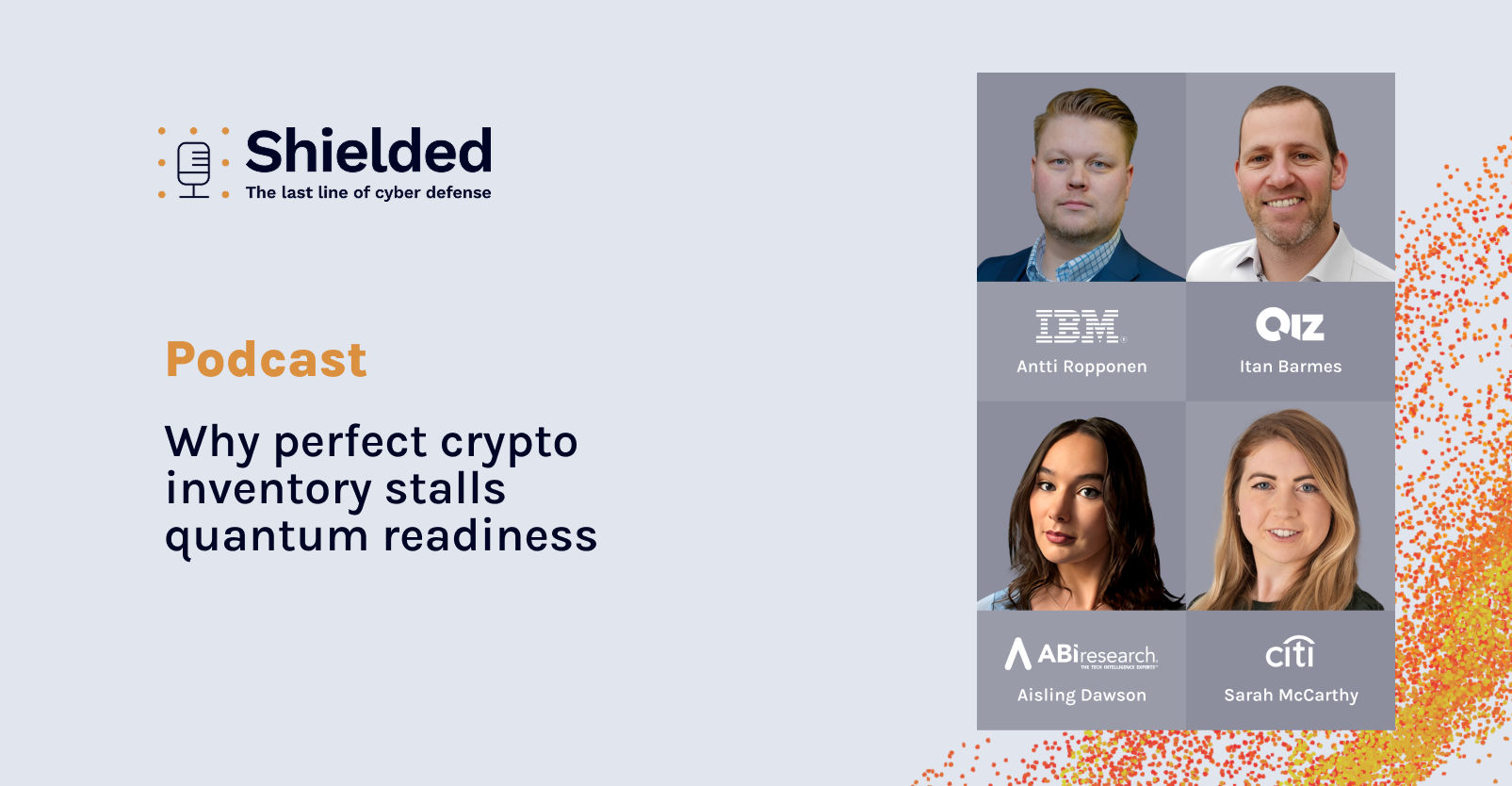
Why perfect crypto inventory stalls quantum readiness
Cybersecurity teams often stall their post-quantum migration by trying to build a 100% complete inventory first. Industry leaders explain why partial visibility combined with cryptographic posture management delivers faster risk reduction. Learn how to prioritize critical assets without getting trapped in analysis paralysis.
| 10/09/2026
Board-level strategies: A look back on what our experts recommend
Top security leaders from HSBC, Microsoft, Citi, and industry experts break down the executive mandate for post-quantum security. Learn how to reframe cryptographic risk for the C-suite, bridge governance gaps, and execute enterprise migration.
| 24/08/2026
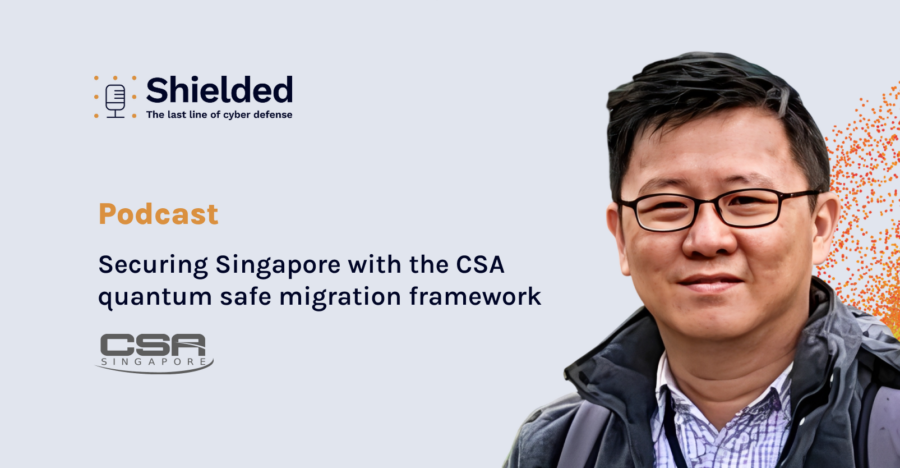
Securing Singapore: The CSA Quantum Safe Migration Framework
Roddy Kok, lead consultant at the Cybersecurity Agency of Singapore, explains the operational frameworks and 2031 timelines for securing critical national infrastructure against quantum threats.
Show All
Solution Briefs
Podcasts
Videos
Best Paper
Research Papers
Whitepapers
Filter by:
All Topics
Solution Briefs
Podcasts
Videos
Best Paper
Research Papers
Whitepapers
|
| 26/10/2023
On Gaussian sampling, smoothing parameter and application to signatures
We present a general framework for polynomial-time lattice Gaussian sampling. Using our techniques, we gain around 200 bytes (>20%) on the signature size.
| 10/08/2023
WrapQ: Side-Channel Secure Key Management for Post-quantum Cryptography
In this work, we study key handling techniques used in real-life secure Kyber and Dilithium hardware. We describe WrapQ, a masking-friendly key-wrapping mechanism designed for lattice cryptography.
| 09/08/2023
Bingo: Adaptivity and Asynchrony in Verifiable Secret Sharing and Distributed Key Generation
We present Bingo, an adaptively secure and optimally resilient packed asynchronous verifiable secret sharing (PAVSS) protocol.
|
| 09/08/2023
Fully Adaptive Schnorr Threshold Signatures
We prove adaptive security of a simple three-round threshold Schnorr signature scheme, which we call Sparkle+.
| 09/08/2023
Snowblind: A Threshold Blind Signature in Pairing-Free Groups
Both threshold and blind signatures have, individually, received a considerable amount of attention. However little is known about their combination.
| 09/08/2023
CSI-Otter: Isogeny-Based (Partially) Blind Signatures from the Class Group Action with a Twist
In this paper, we construct the first provably-secure isogeny-based (partially) blind signature scheme.
| 09/08/2023
Finding Short Integer Solutions When the Modulus Is Small
We present cryptanalysis of the inhomogenous short integer solution problem for anomalously small moduli q by exploiting the geometry of BKZ reduced bases of q-ary lattices.
| 31/07/2023
TLS → Post-Quantum TLS: Inspecting the TLS landscape for PQC adoption on Android
We need to better understand the constraints and requirements of TLS usage by Android apps in order to make an informed decision for migration to the post-quantum world.
| 21/07/2023
High-Order Masking of Lattice Signatures in Quasilinear Time
We design a lattice-based signature scheme specifically for side-channel resistance and optimize the masked efficiency as a function of the number of shares.
| 30/05/2023
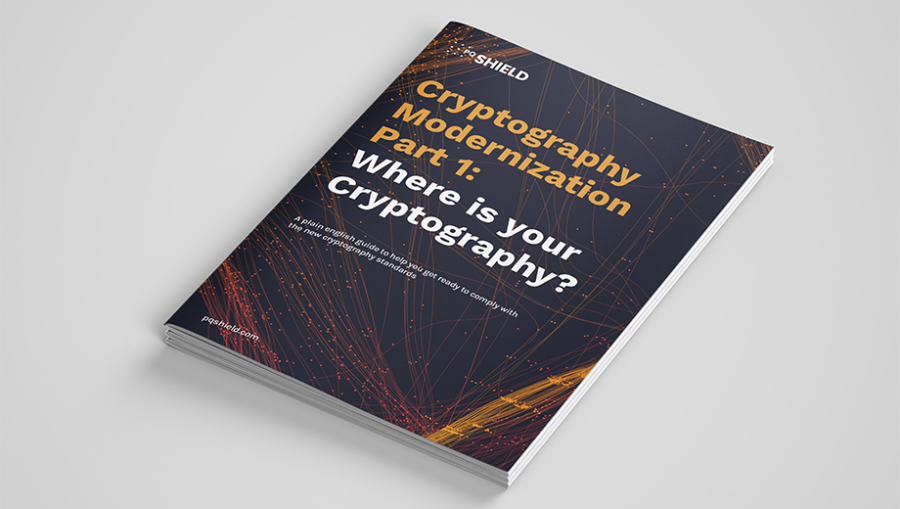
Cryptography Modernization Part 1: Where is your Cryptography?
A plain english guide to help you get ready to comply with the new cryptography standards.
| 23/05/2023
Signature for Objects: Formalizing How to Authenticate Physical Data and More
This paper proposes a new concept called signatures for objects to guarantee the integrity of objects cryptographically.
| 02/05/2023
A Key-Recovery Attack Against Mitaka in the t-Probing Model
We uncover a flaw in the security proof of MITAKA, and subsequently show that it is not secure in the t-probing model.
1
…
10
11
12
13
14
…
16






 | 26/10/2023