

Key takeaways
In this white paper series, we look at:
- Post-quantum encryption protects data against future attacks from quantum computers
- Quantum computing presents a significant long-term risk to today’s cryptography
- Waiting to address quantum threats is not a viable security strategy
- New NIST post-quantum standards are approaching and preparation is essential
- PQShield supports organisations transitioning to quantum-safe systems
Understanding the growing security challenge
The challenges facing information security today are greater and more complex than ever before. We all know just how severe the risks of an attack are.
With so many cyber threats knocking at the door, security experts already have their plates full.
Looking further ahead can feel overwhelming, but when it comes to understanding what is post-quantum encryption, the reality is that the ‘fix it when it breaks’ approach just isn’t viable when it comes to information security.
Those that fail to prepare for future threats must, unfortunately, prepare to fail. And when it comes to quantum, that failure could be pretty colossal.
The quantum threat to cryptography
With their formidable computing power, quantum machines will represent one of the greatest threats yet posed to information security.
Many of today’s cryptographic systems rely on mathematical problems that are extremely difficult for classical computers to solve. Quantum computers will be able to solve these problems far more efficiently, potentially rendering widely used encryption methods ineffective.
This risk is not limited to the future. Data stolen today can be retained and decrypted later once quantum capabilities mature, exposing sensitive information long after it was believed to be secure.
What is post-quantum encryption?
Post-quantum cryptography refers to cryptographic algorithms that are designed to remain secure even when quantum computers become powerful enough to attack existing encryption.
It does not assume that quantum threats are distant or theoretical. Instead, it recognises that cryptographic systems must evolve now to protect long-lived data and critical infrastructure over the coming decades.
This shift is about preparation rather than panic, ensuring organisations are ready well before quantum computing becomes operational at scale.
NIST standards and the path forward
To address this emerging risk, the National Institute of Standards and Technology is leading the Post-Quantum Cryptography Standardization Process. These standards will define which quantum-resistant algorithms organisations should adopt and trust.
Transitioning to these standards will take time. Systems are complex, cryptography is deeply embedded, and change must be handled carefully to avoid introducing new vulnerabilities.
PQShield’s role in post-quantum readiness
At PQShield, our world-class researchers and engineers are leading contributors to the NIST Post-Quantum Cryptography Standardization Process.
We help business leaders and technical experts understand the reality of the quantum threat, and provide the technology they need to transition from legacy to quantum-safe systems. This work supports organisations at every stage of their post-quantum journey, from early assessment to implementation.
Preparing today for tomorrow’s threats
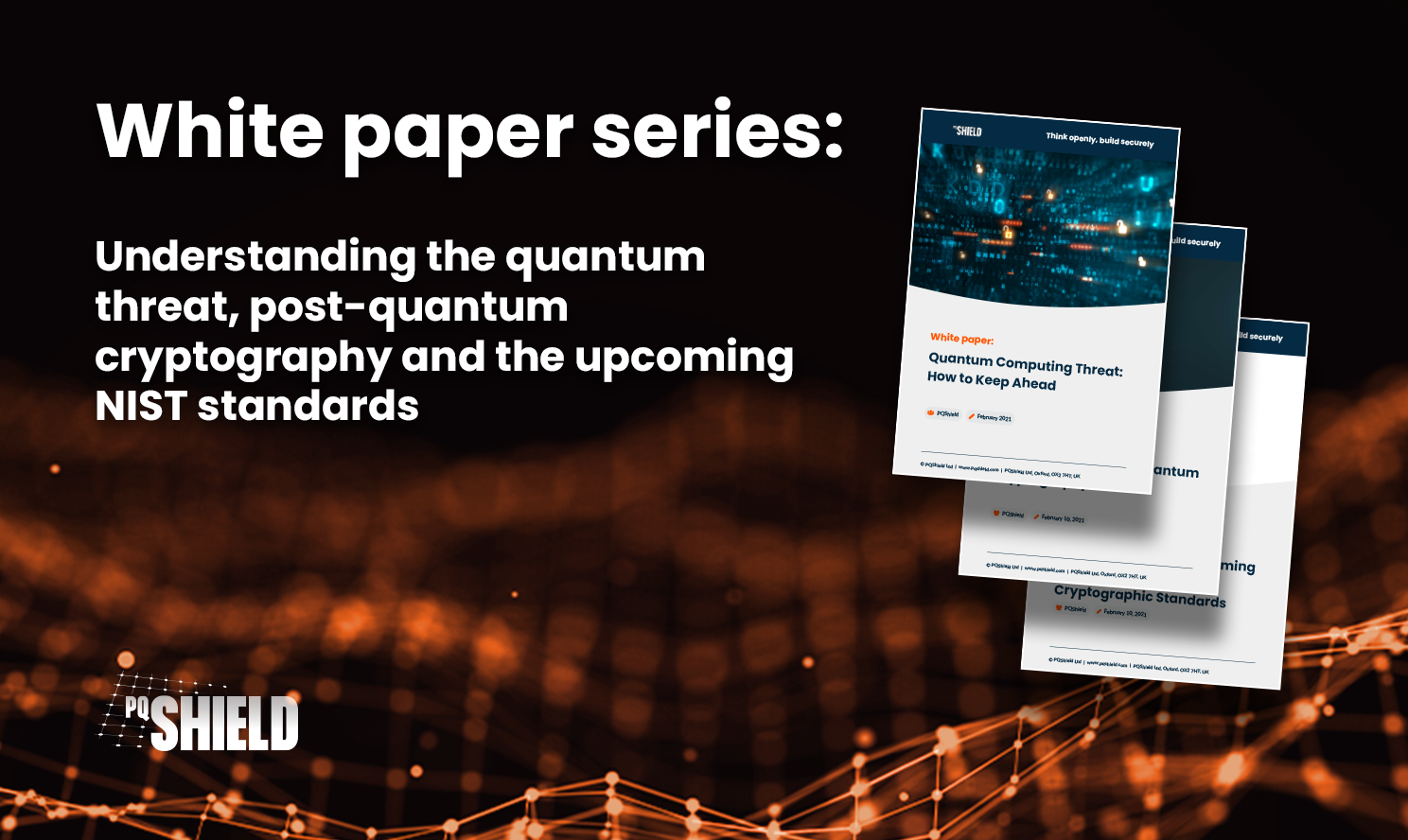
Our new white paper series contains everything you need to know to start protecting your own business, from understanding the threat to preparing for new cryptography standards.
Explore PQShield’s white paper series to gain a deeper understanding of the quantum threat and learn how to prepare your organisation for post-quantum cryptography and upcoming NIST standards.
To find out more, contact our team today.
Frequently asked questions
Why is quantum computing a threat to current encryption?
Quantum computers can solve certain mathematical problems far more efficiently than classical computers, allowing them to break widely used public-key cryptographic systems.
When will post-quantum standards be required?
NIST is in the process of finalising post-quantum cryptography standards. Organisations are encouraged to begin preparation now due to the complexity and length of cryptographic migrations.
How does PQShield support post-quantum transitions?
PQShield provides quantum-safe cryptographic solutions, technical expertise, and guidance to help organisations migrate securely and efficiently.
Do organisations need to replace all cryptography immediately?
No. Most transitions will be gradual, often using hybrid approaches that combine existing cryptography with post-quantum algorithms during the migration period.