

Key Takeaways
- NIST post quantum cryptography standards are reshaping IoT security requirements
- quantum resistant security for industrial IOT is becoming a priority for long-lifecycle devices
- Migration requires updates across communication, platforms, and identity systems
- Industrial and IoT sectors face heightened long-term risk
- PQShield supports scalable, quantum-safe implementation
The New encryption standards from NIST & RISC-V: what do IoT developers need to know?
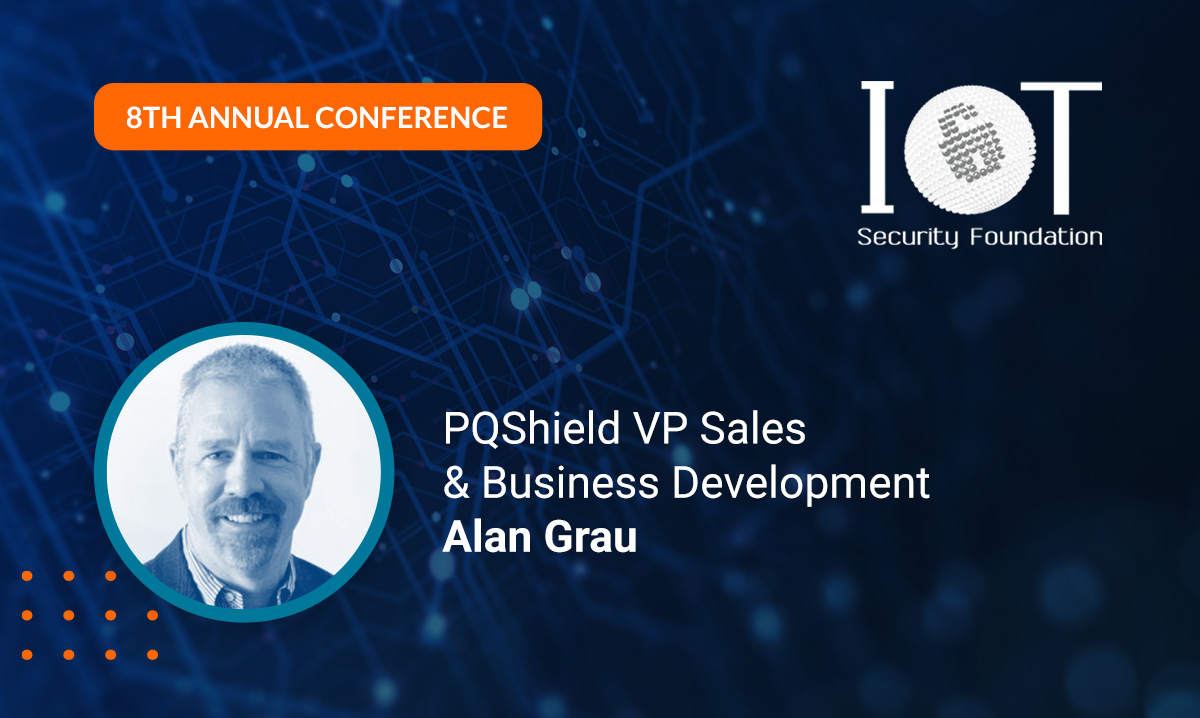
As part of the recent IoTF event, PQShield’s Alan Grau shared his thoughts on the new PQC standards and what they mean for designers of IoT and connected devices.
With growing focus on quantum resistant security for industrial IOT, these developments mark an important shift for engineers designing long-life, connected systems.
What’s changed with NIST and RISC-V?
After three selection rounds, the NIST Post-Quantum Cryptography (PQC) Standardization Project recently selected new PQC algorithms to be ratified as new Federal standards for key establishment and digital signatures.
It has also been announced that new NSS (Defence) cryptographic suites will be based on NIST PQC standards. In addition, RISC-V has recently ratified new cryptographic extensions.
Together, these developments signal a clear direction for future security architecture, particularly for quantum resistant security for industrial IOT.
Where should developers start?
Secure element, chip, and platform engineers should begin planning migration to PQC using the selected algorithms.
At the same time, application developers and product engineers should focus on building crypto agility. This ensures systems can support both current and future algorithms, including round 4 candidates.
For many organisations, the key challenge is understanding where to begin.
Let’s break it down.
Key migration areas
PQC for Secure Communication
- Updated existing protocols (TLS, IPSec, etc.) with PQC algorithms
- Hybrid solutions allow interoperability during transition period
PQC for Platform Security
- Secure boot processes must adopt PQC algorithms
- Software and firmware update mechanisms must be updated
PQC for other use cases
- Public and private PKI systems must transition
- Document signing and device authentication must evolve
- Identity and trust frameworks must support PQC
When should organizations act?
There is ongoing debate about timing.
Quantum computers are expected to break RSA and ECC within the next decade. While this may seem distant, many devices being designed today will remain in use far beyond that timeframe.
When factoring in:
- Long product lifecycles
- Complex system updates
- The risk of “harvest now, decrypt later” attacks
It becomes clear that planning for quantum resistant security for industrial IOT must begin now.
Most at-risk Industries
- Defence & infrastructure: The retrospective potential of any quantum attack means historic government, financial, health and trade secrets are at risk in the future.
- Internet of things: Thousands of IoT devices are deployed every day, carrying sensitive data about us and our devices.
- OEM & industrial systems: Long-lifecycle products like cars and industrial equipment that are designed today need to comply with both current and upcoming cryptography standards.
These sectors highlight the growing importance of quantum resistant security for industrial IOT.
Planning for the future
Regardless of your implementation timeline, the direction is clear.
Organizations must begin preparing for quantum-safe security today to avoid future risk and costly retrofitting.
PQShield supports this transition with solutions designed for performance, scalability, and long-term resilience, helping organizations implement quantum resistant security for industrial IOT effectively.
Ready to implement quantum resistant security for industrial IOT?
Contact PQShield today and start your journey to quantum-safe infrastructure.
Frequently asked questions
What is quantum resistant security for industrial IoT?
Quantum resistant security for industrial IOT refers to cryptographic protections designed to secure industrial and connected devices against future quantum attacks.
Why is IoT particularly vulnerable to quantum threats?
IoT devices often have long lifecycles and limited update capabilities, making them more exposed to future decryption risks.
What are NIST PQC standards?
They are quantum-safe cryptographic algorithms selected by NIST to replace vulnerable traditional encryption methods.
What is crypto agility?
Crypto agility is the ability to update cryptographic algorithms without major system redesign.
How does PQShield support IoT security?
PQShield provides scalable, efficient cryptographic solutions designed for embedded and industrial environments.