

Abstract
The European Digital Identity Wallet (EUDI wallet) represents one of the largest shifts in digital governance, aiming to give citizens secure control over personal credentials across member states. However, deploying high-assurance trust architectures while preparing for post-quantum cryptography presents major technical hurdles for hardware vendors, service providers, and certification bodies.
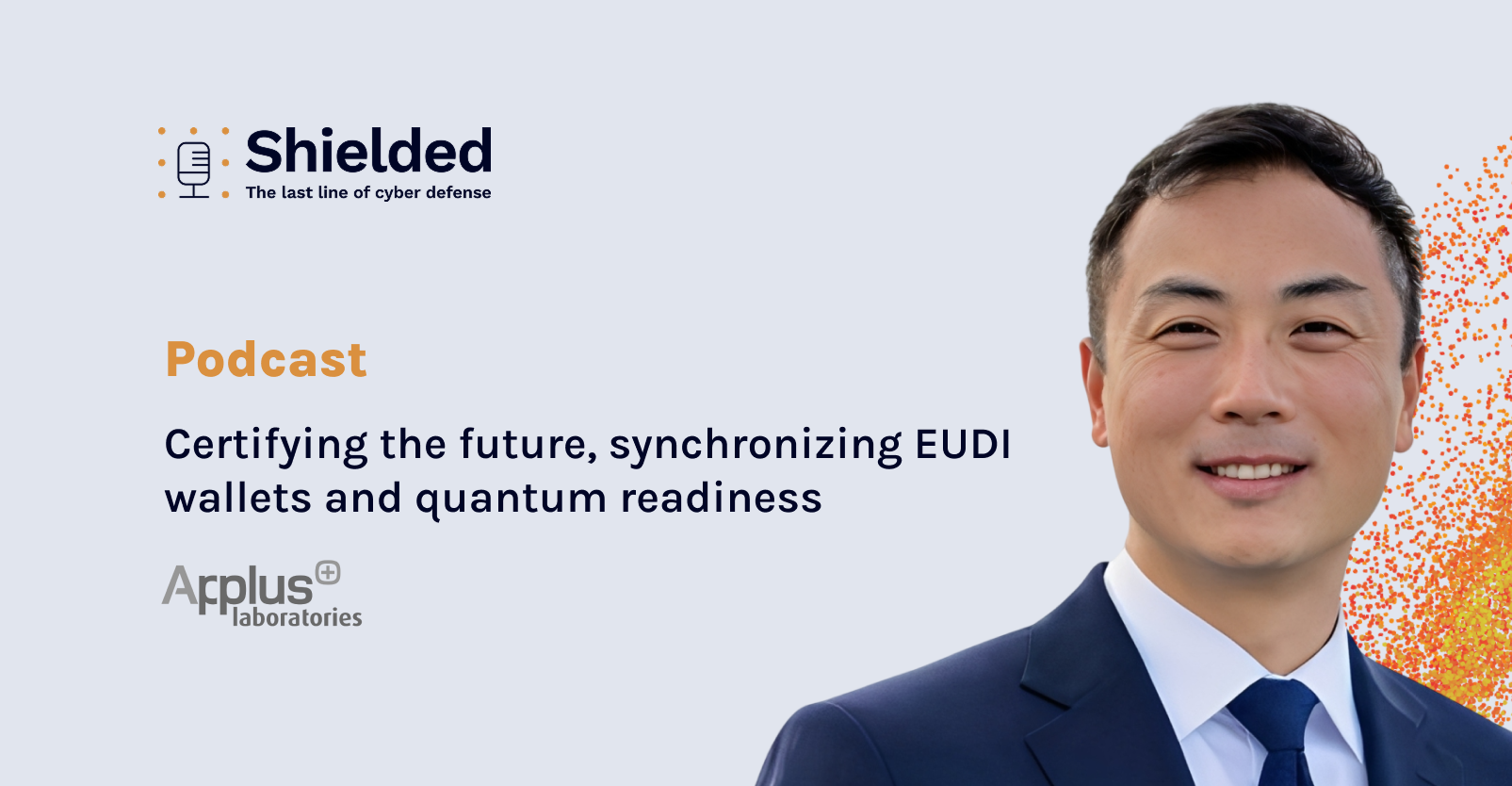
In this episode of Shielded: The Last Line of Cyber Defense, host Johannes Lintzen sits down with Wei Yuan, lab manager and director of operations at Applus+ Laboratories. Wei outlines the structural trade-offs between local security elements and remote HSM deployments, the challenge of building crypto agility into hardware, and why the European Commission timeline leaves zero room for delay.
What you’ll learn
- Why the 2026 deployment mandate for EUDI Wallets creates immediate urgency
- The specific risks of storing biometric and identity data in a quantum environment
- How laboratories help vendors prove their security claims through independent review
- Why back-end systems adapt to new protocols faster than hardware devices
- The role of ENISA and the European Commission in shaping certification schemes
- How the Cyber Resilience Act affects both new and legacy products
- Why crypto agility is the only way to manage overlapping regulatory timelines
- The primary reason most security systems fail during real-world use
About Wei Yuan
Wei Yuan is lab manager and director of operations at Applus+ Laboratories. Working at the boundary of high-assurance evaluation, hardware security, and regulatory policy, he serves as an expert within ENISA working groups, helping shape European digital identity certification standards and transition pathways to post-quantum cryptography.