

Key Takeaways
- NIST has finalised three major PQC standards: FIPS 203, 204, and 205
- NIST approved PQC algorithms now include ML-KEM, ML-DSA, and SLH-DSA
- Most updates focus on compliance, security hardening, and performance
- Domain separation has been widely introduced across algorithms
- This as a major milestone for quantum-safe adoption
Introduction to NIST Approved PQC Algorithms
The release of the NIST approved PQC algorithms FIPS 203, FIPS 204, and FIPS 205, was a significant milestone in the story of Post Quantum Cryptography (PQC). It’s been long-anticipated, especially since the draft standards were published last year, culminating a rigorous submission process that began way back in 2016.
These standards build on earlier draft versions released in August 2023, refining the algorithms to improve compliance, security, and real-world performance. For organizations preparing for the quantum era, this is a critical step forward.
At PQShield, this moment represents both validation and opportunity as the industry transitions towards quantum-resistant systems.
Overview of the Finalised PQC Standards
FIPS 203: ML-KEM (formerly CRYSTALS-Kyber)
ML-KEM is now one of the core NIST approved PQC algorithms for key encapsulation.
Key Updates:
- Domain separation added to K-PKE.KeyGen. This prevents the misuse of keys used to target different security levels.
- An additional fix was added that reverts the switched indices of a particular matrix used in K-PKE.KeyGen and K-PKE-Encrypt. It has been changed back to match the original CRYSTALS-Kyber submission.
These refinements improve both interoperability and adherence to cryptographic best practices.
FIP4 204: ML-DSA (formerly CRYSTALS-Dilithium)
ML-DSA is a digital signature scheme that has undergone several important refinements.
Key Updates:
Malformed input check restored in Algorithm 21 (hint unpacking)
- Domain separation added for cases where a message is signed directly or a digest of the message is signed.
- Domain separation added (Algorithm 6) to offer resistance against the possibility that different parameter sets could be expanded from the same seed.
These changes strengthen the robustness of ML-DSA within the NIST approved PQC algorithms suite.
FIP4 205: SLH-DSA (formerly SPHINCS+)
SLH-DSA provides a hash-based signature alternative within the standard.
Key Updates:
- Domain separation added for cases where a message is signed directly, or a digest of the message is signed.
- This ensures greater resistance to cross-protocol attacks and enhances overall reliability.
Why These Changes Matter
While the updates from the draft versions may appear incremental, they play a crucial role in preparing the NIST approved PQC algorithms for widespread deployment.
Security Enhancements
- Domain separation reduces the risk of key and signature misuse
- Restored validation checks improve resilience against malformed inputs
Compliance Improvements
- Aligns implementations with strict cryptographic standards
- Ensures consistency across different environments and use cases
Performance Optimisation
- Fine-tuning helps enable efficient hardware and software integration
- Supports scalable deployment across industries
PQShield continues to play a leading role in helping organisations implement these standards effectively.
Industry Impact, and PQShield’s Perspective
These changes are aimed at maximizing compliance and performance as the standards become widely used.
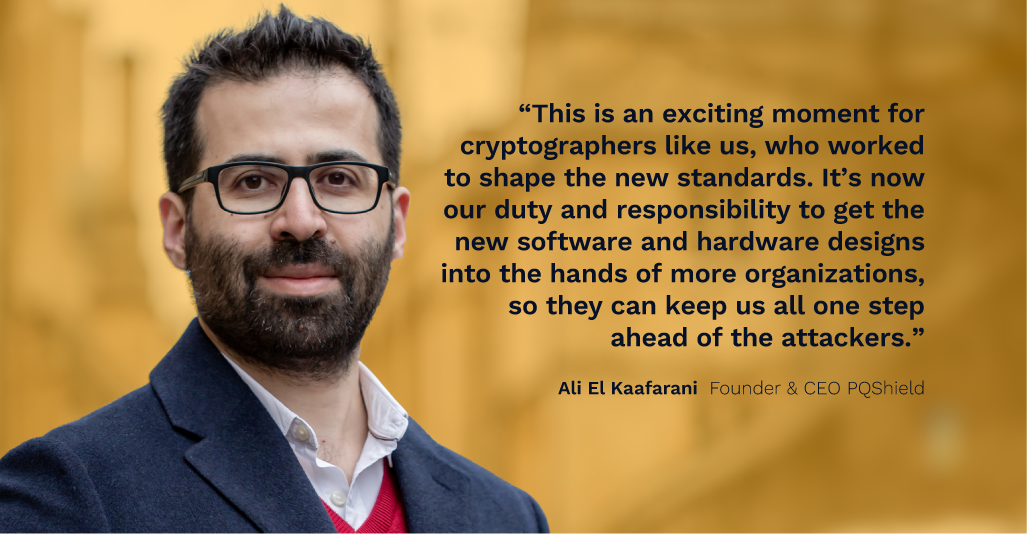
Publication is an inflection point for all of us, especially at PQShield, as our CEO, Ali explains:
“This is an exciting moment for cryptographers like us, who worked to shape the new standards. It’s now our duty and responsibility to get the new software and hardware designs into the hands of more organizations, so they can keep us all one step ahead of the attackers.”
PQShield is actively supporting the transition by delivering quantum-secure solutions tailored to modern infrastructure.
What’s Next for PQC Adoption?
With the NIST approved PQC algorithms now finalised, organisations should begin planning their migration strategies.
Key Steps to Consider
- Assess current cryptographic infrastructure
- Identify quantum-vulnerable systems
- Begin integrating PQC-ready solutions
- Work with trusted providers like PQShield
Early adoption will be critical to maintaining long-term security.
You can find out more detailed information about each of the published PQC standards here:
Get Started with PQShield Today
The transition to NIST approved PQC algorithms is already underway. Don’t wait until quantum threats become reality.
Contact PQShield today to explore how you can secure your systems with cutting-edge post-quantum cryptography solutions.
Frequently Asked Questions
What are NIST approved PQC algorithms?
These are post-quantum cryptographic algorithms standardised by NIST, including ML-KEM, ML-DSA, and SLH-DSA, designed to resist quantum attacks.
Why are NIST approved PQC algorithms important?
They protect sensitive data from future quantum computer threats and ensure long-term cryptographic security.
How do NIST approved PQC algorithms differ from draft versions?
The final versions include improvements like domain separation, restored validation checks, and compliance-focused refinements.
When should organisations adopt NIST approved PQC algorithms?
Organisations should begin planning and implementing PQC solutions now to stay ahead of evolving threats.
How can PQShield help with NIST approved PQC algorithms?
PQShield provides expertise, tools, and solutions to help organisations transition smoothly to quantum-secure cryptography.